Two days full of traditional music, happy people, folk clothing and of course folk dance in Polygyros, the mountainous capital of Halkidiki!
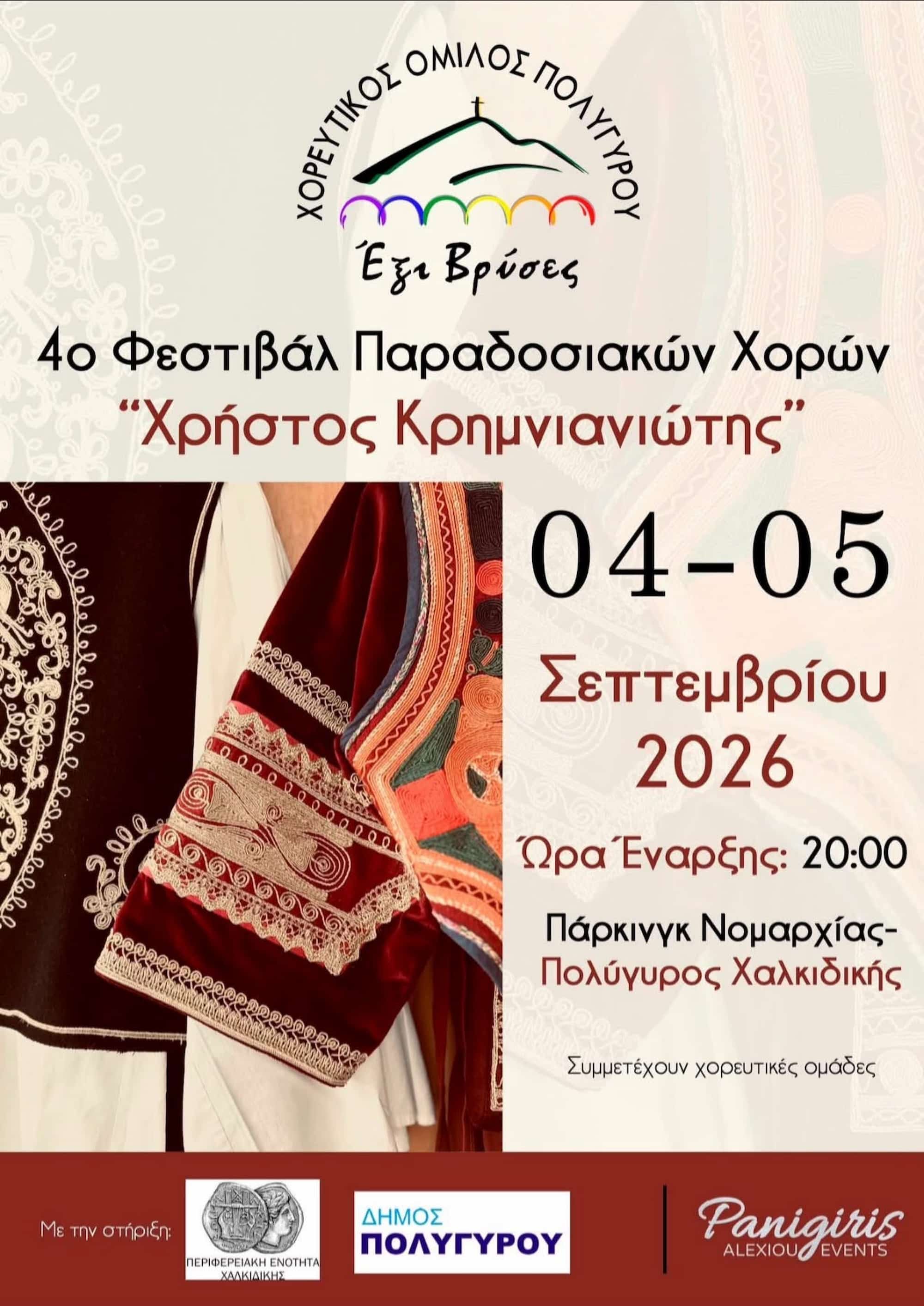
The folk dance group Exi Vrises of Polygyros is organising and welcoming us to their fourth Folk-dance festival "Christos Krimnianiotis".
For the practical information:
- The festival occurs on September 4th and 5th.
- Location: Car Park of the Poligiros Prefecture Office
And now to the fun facts!
Did you know that Halkidiki has its own folk dances? One of them is “san pas sti vrisi”, straight from Ierissos village, while the other is the “enas kontos kontoutsikos” from Metagitsi. Yet, the dances of Halkidiki are part of a wider group of folk dances, the ones from Macedonia.
Folk dance in Halkidiki and wider Macedonia
In Western Macedonia, two main categories can be distinguished based on melodic, rhythmic and dance characteristics. One is that of the mountainous, southern and western regions of Mount Olympus, which resembles the Thessaly-Epirus style of songs, dances and rhythms, whilst the other is that of the lowland and urban areas of Pieria, Imathia and Florina, with a distinctly local character.
In the villages of Central Macedonia, alongside the locals, there are also refugees from Pontus, Eastern Rumelia and Macedonia, as well as Vlachs. All these groups naturally ‘enrich’, in their own way, the region’s dance tradition.
Eastern Macedonia rivals Western and Central Macedonia in terms of musical and dance tradition. The mountain ensembles of Chalkidiki, Pangeo and Kedrylia have been, and continue to be, a source of diverse motifs which, despite the inevitable changes noted, reflect life as it evolves.
Dance patterns and details
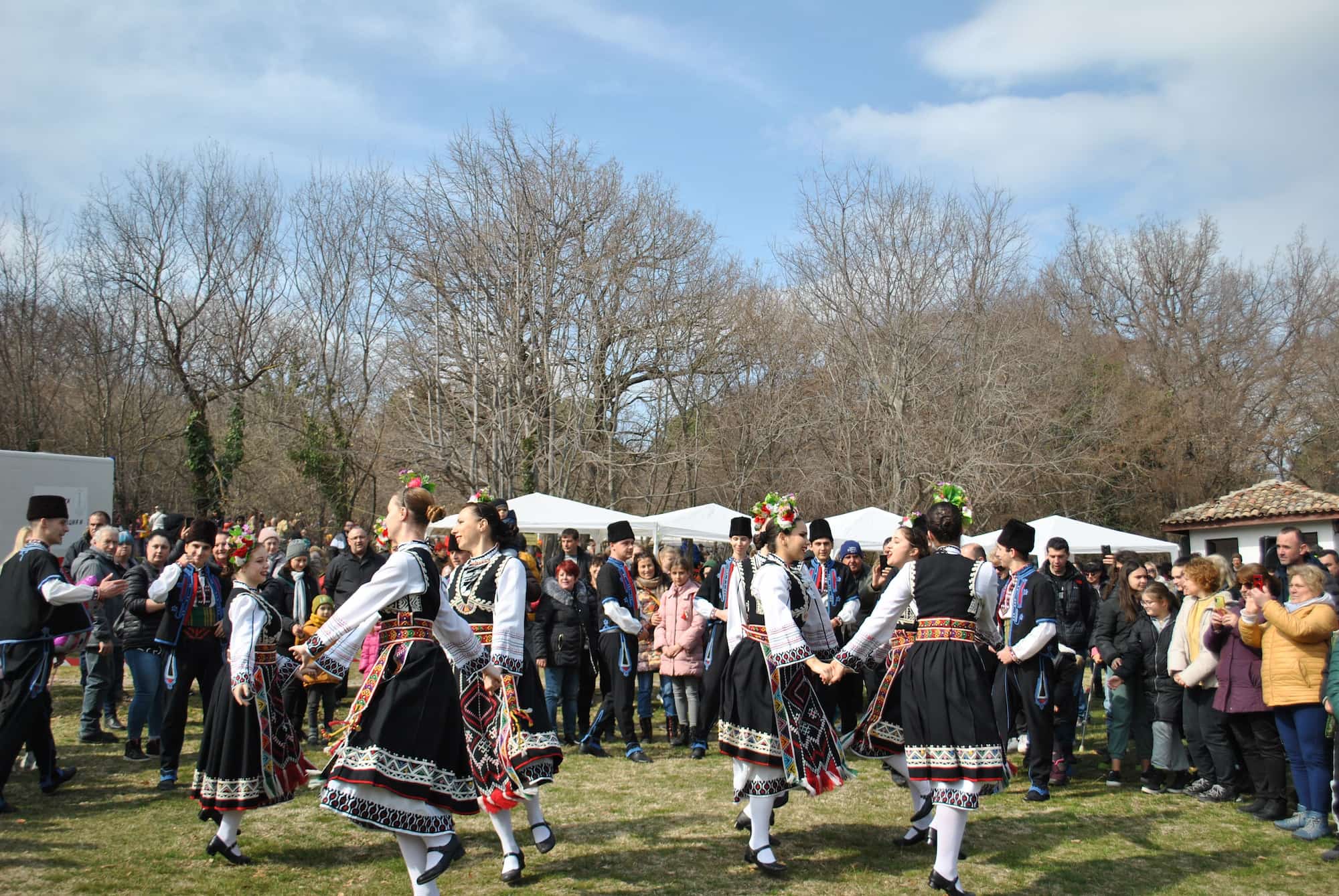
The fact that Macedonia is a geographically extensive region means that different dance patterns can be observed and that the style varies depending on the area. However, particularly in central and western Macedonia, a common feature is the vigorous movement and rhythm, as well as the dancers’ ‘light’ footwork.
In these regions, the lead dancer is in charge of the dance group, which he or she can lead at will, forming various dance patterns outside the strictly defined and formalised circular shape. He holds a handkerchief in his hand, which he waves freely in time with the rhythm, or waves it to convey signals of full participation to the other dancers.
In certain dances, the lead dancer guides the group through labyrinthine formations (e.g. γκάιντα, ντούσκο, μποέμτσα, etc.), where, depending on the dance, a different labyrinthine pattern is observed.
It appears that these formations convey elements of initiation into ancient mysteries, in which the initiator learnt about the painless passage from life to death, about the protection of the living from the dead and of the dead from invisible spirits, about the process of the fertility rite, and so on.
If you want to learn more, follow Konxa and be updated with all fun activities and festivals happening in Halkidiki. Besides, Konxa is soon launching a folk dance experience where you can learn folk dances in Halkidiki of the whole Makedonia and also the islands, the more “hoppy” dances…
The information of the text was enriched by the blog of the website of Παραδοσιακό Εργαστήρι.
- When
- Friday, 4 September 2026Until 5 September 2026
- Where
- Polygyros, Halkidiki
- Entry
- Free entry